Key facts
- Best overall: April–June and September–October — mild days, cold clear mornings and the most balloon flights.
- Summer (July–August) is hot by day but reliable for balloons; start activities early.
- Winter (December–March) brings snow-covered valleys, fewer visitors and lower prices, but more cancelled flights.
- Cappadocia sits at 1,000–1,300 m, so nights are cool even in summer.
Spring (April–June): green valleys and the best balance
Spring is many people’s favourite season. The orchards and vineyards in the valleys turn green, wild flowers appear along the hiking trails, and daytime temperatures climb from the mid-teens in April to the high twenties in June.
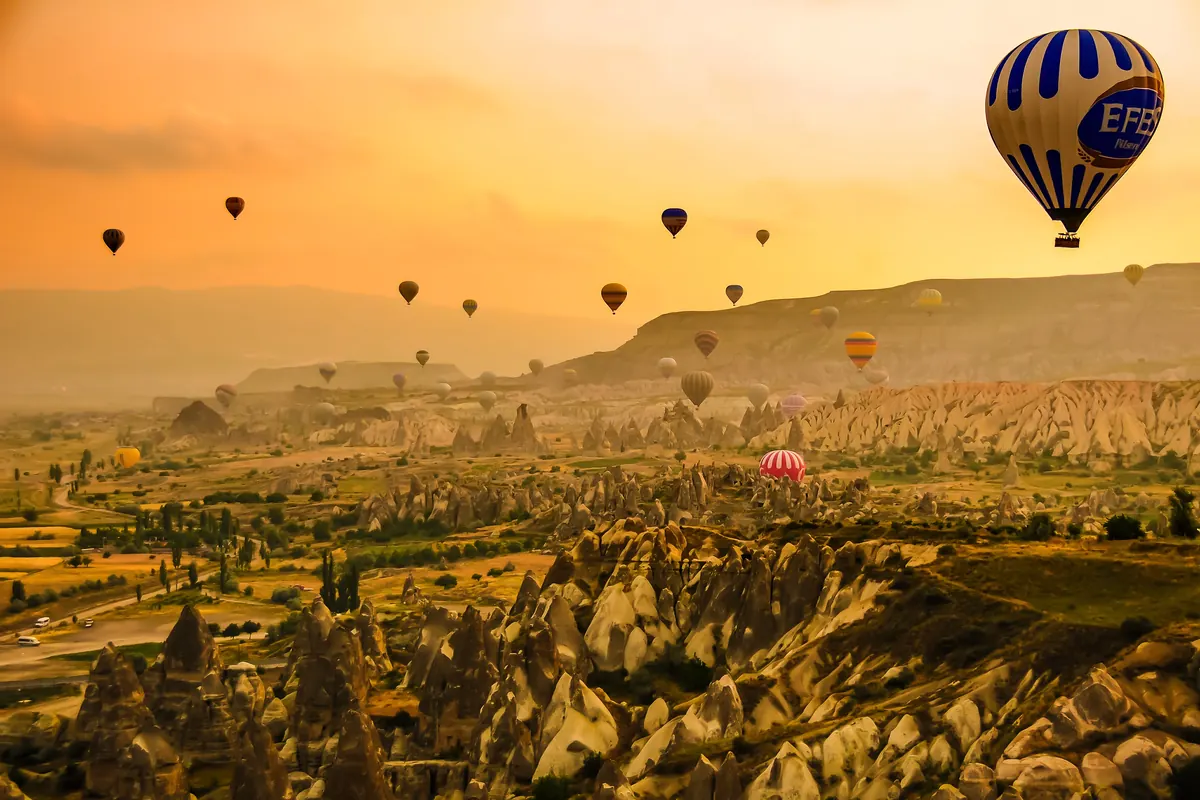
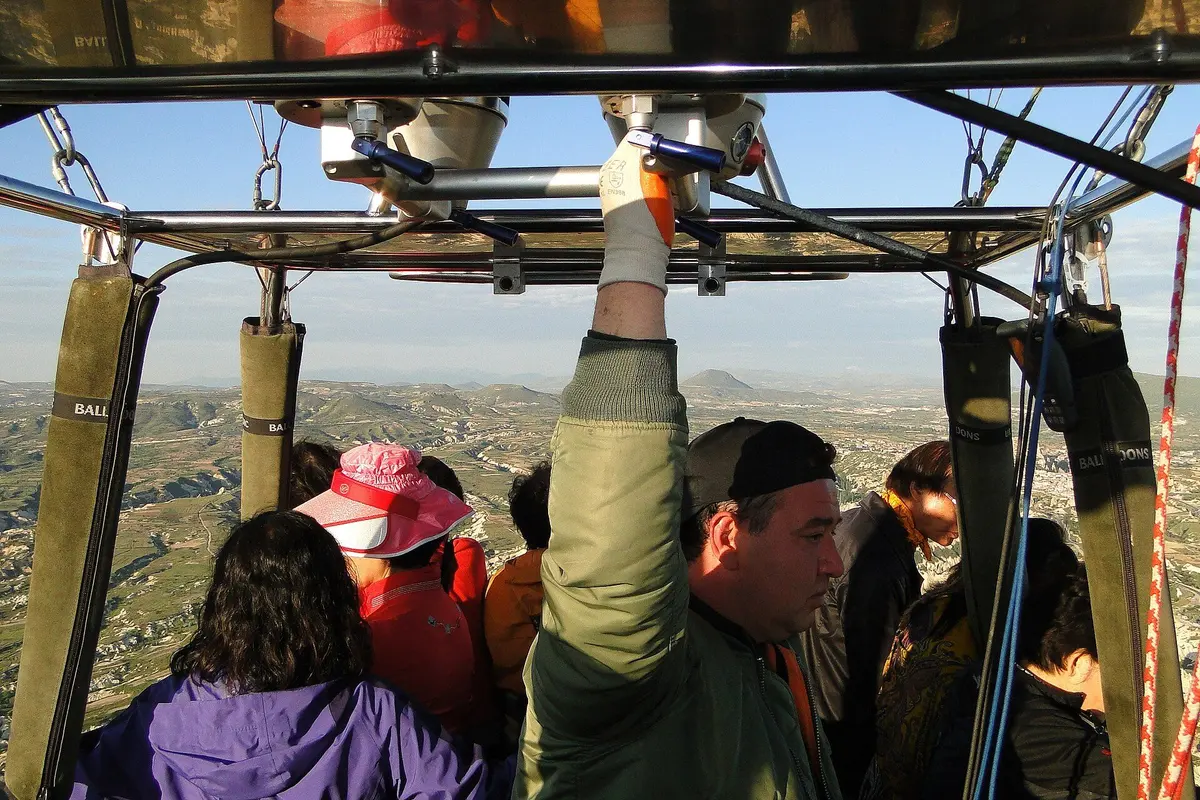
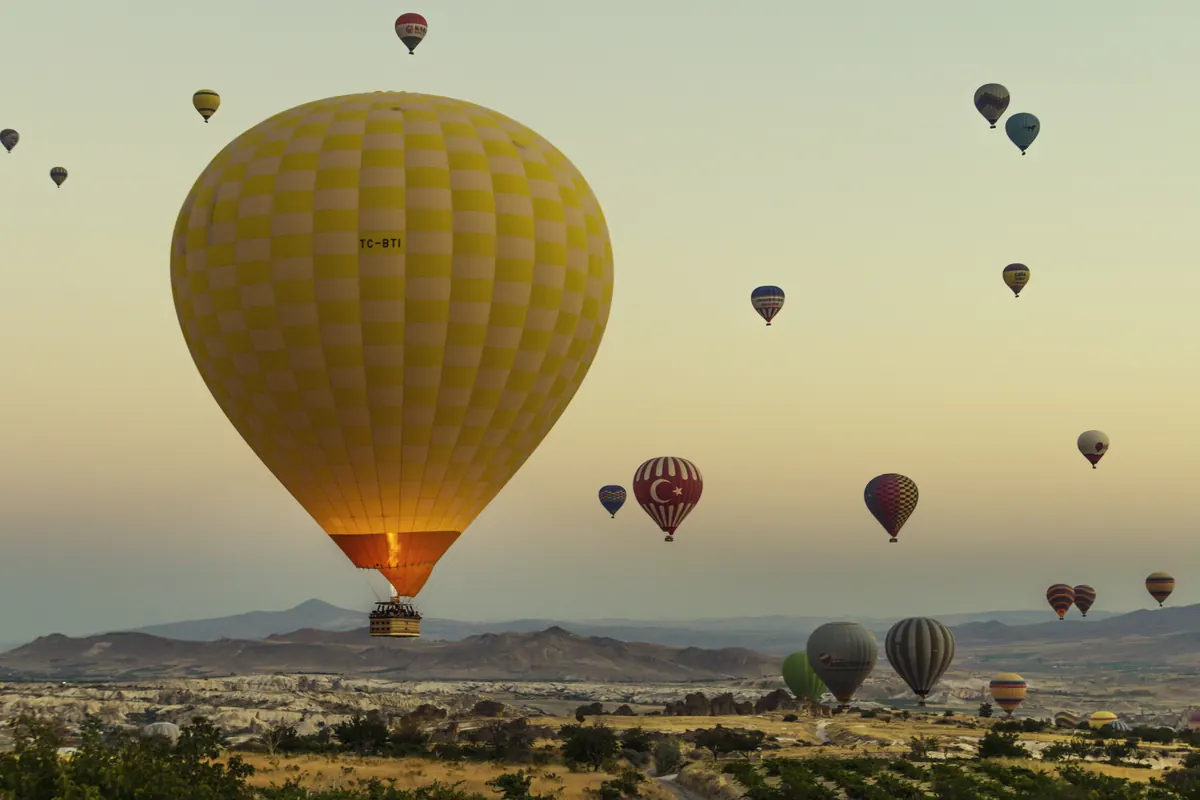
Mornings are still cold, which is perfect for ballooning: April, May and June have a high share of flying days. This is also high season, so book flights and cave hotels well in advance, especially around Easter and public holidays.
Summer (July–August): long days and reliable flights
Summer is dry and stable, with afternoon temperatures often above 30 °C. Balloon flights rarely get cancelled, and sunrise is early — pickups can be before 4:30 in the morning.
The midday heat makes hiking hard, so plan valley walks for early morning or late afternoon, when the light is also best for photography. Summer haze can soften long-distance views, but sunsets in Red and Rose Valley are spectacular.
In July and August, book day tours that start early and take a rest in the cool of your cave hotel at midday.
Autumn (September–October): golden light and harvest season
September and October rival spring as the best time to visit. The heat fades, the air clears and the vineyards change colour. It is grape harvest season in Ürgüp and Mustafapaşa, and the light on the rock formations turns warm and golden.
Balloon conditions are excellent and demand is high — October is one of the busiest and most expensive months for flights. November is quieter and cooler, with a growing chance of fog in the mornings.
Winter (December–March): snow, silence and lower prices
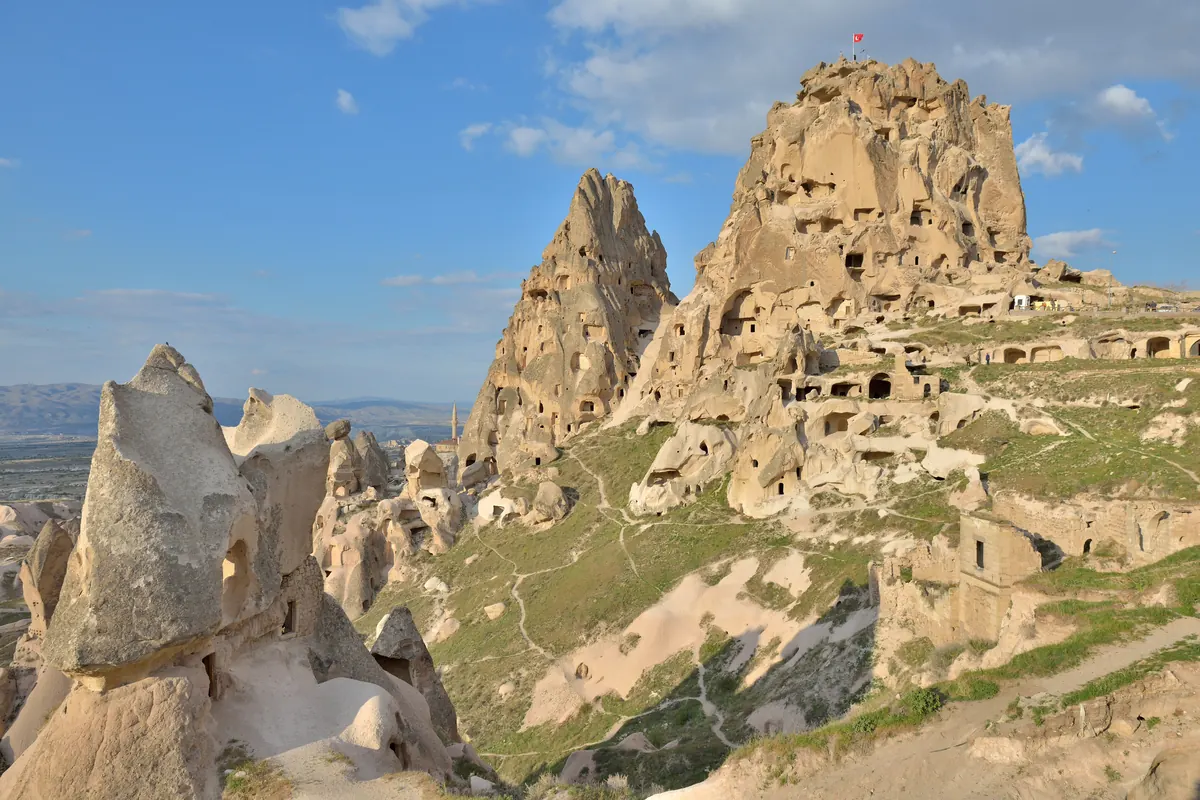
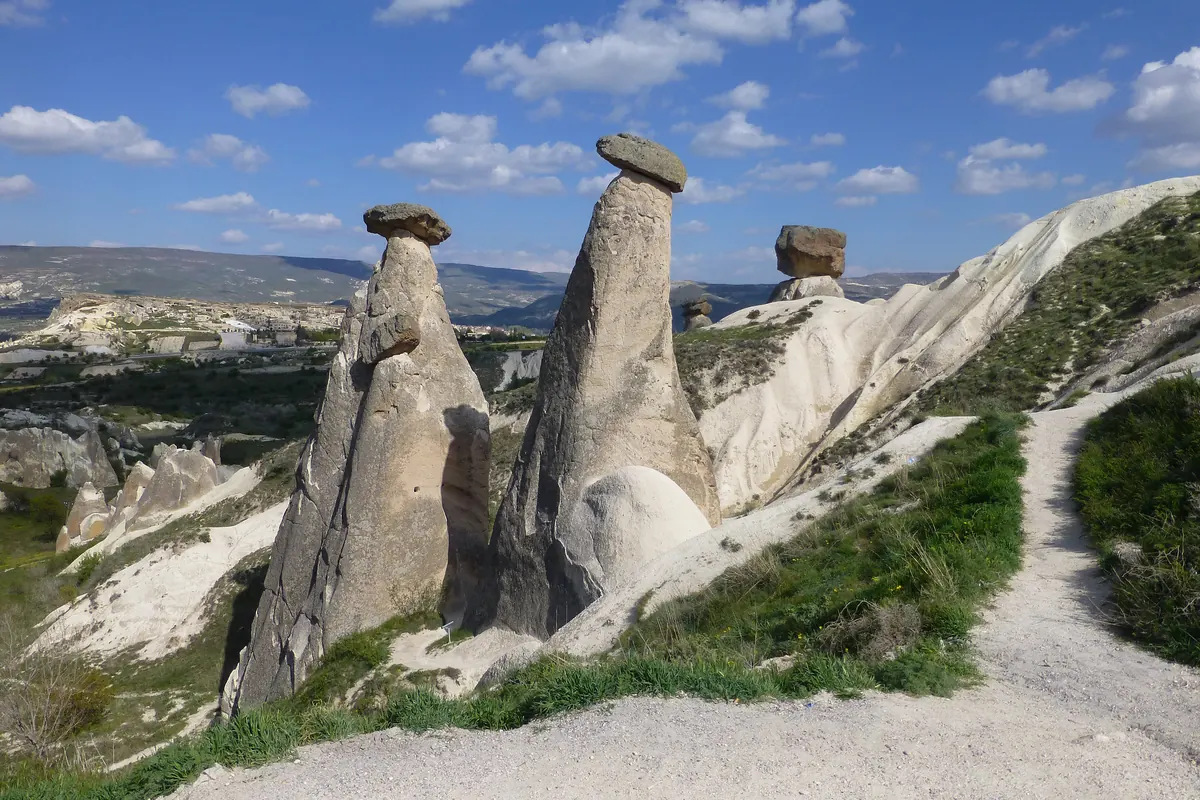
Few places look as magical as Cappadocia under snow. Fairy chimneys with white caps, steaming cave-hotel chimneys and almost empty valleys make winter a photographer’s dream, and hotel prices drop considerably.
The trade-off is the weather. Temperatures fall well below zero at night, some hiking trails get muddy or icy, and balloon flights are cancelled more often because of fog, snow and wind. If a flight is your main reason to come in winter, plan two or three mornings.
Month by month at a glance
Temperatures are typical daytime highs; flying chance is a general indication based on recent seasons.
- January–February: 2–6 °C, snow likely, lower flying chance, lowest prices.
- March: 8–12 °C, changeable weather, medium flying chance.
- April–May: 16–22 °C, green valleys, high flying chance, busy.
- June: 25–27 °C, long days, high flying chance.
- July–August: 29–31 °C, dry and stable, high flying chance, early sunrise.
- September: 26 °C, golden light, high flying chance.
- October: 19 °C, harvest season, high flying chance, peak demand.
- November: 11 °C, quieter, fog becomes more common.
- December: 5 °C, festive season, lower flying chance.
How many days do you need?
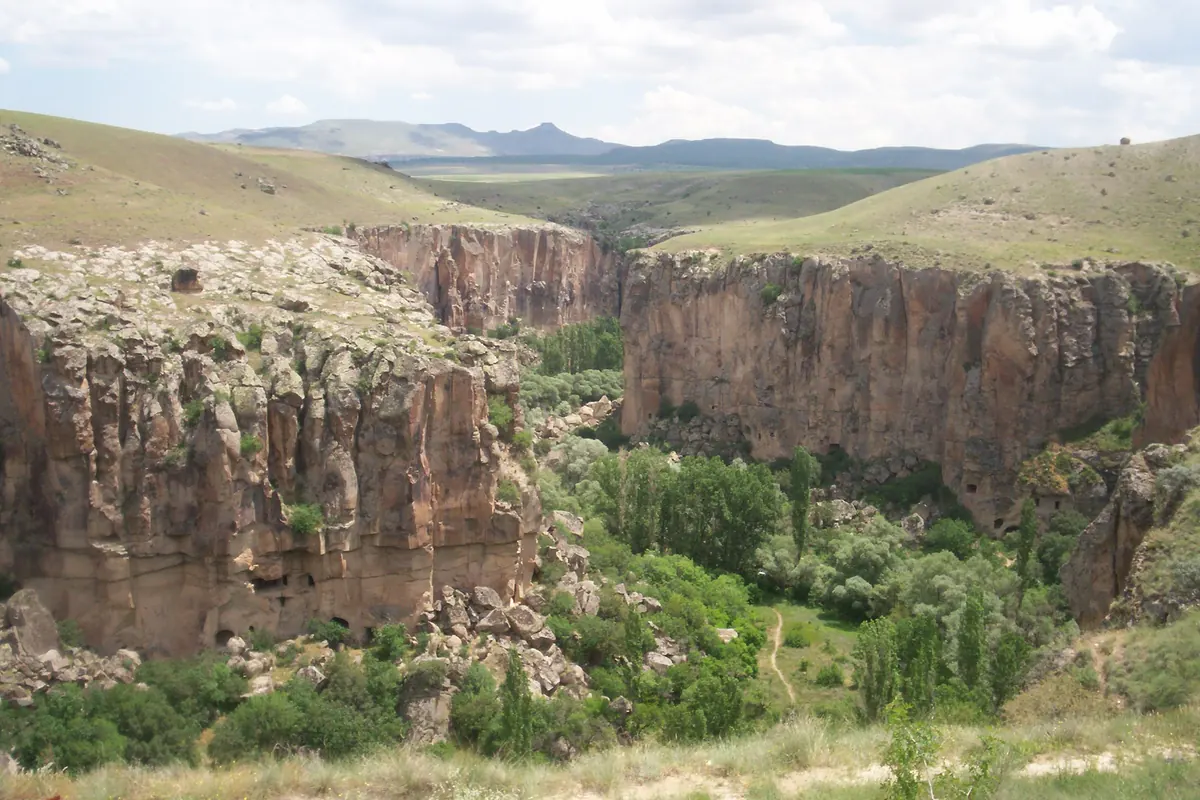
Two full days let you see the essentials: a sunrise balloon flight and the Red Tour on day one, the Green Tour with an underground city and Ihlara Valley on day two. Three days add a sunset ATV ride, a valley hike or a slower day in Ürgüp and Avanos — and give the balloon a spare morning.
Crowds and prices through the year
Demand follows the weather. April to June and September to October are the busiest periods, with the highest prices for hotels and balloon flights and the earliest sell-outs. Public holidays in Türkiye and Easter in Europe add extra pressure.
July and August are popular with families and travellers from Asia, while January to March is the quietest time, with the lowest hotel rates. If you travel in high season, book your balloon and your hotel as early as possible; in winter you can often decide a few days ahead.
Festivals and special moments
Late summer and early autumn bring the grape harvest, and local wineries in Ürgüp and Mustafapaşa celebrate with tastings. In December, the Mevlana commemoration in Konya draws many visitors who combine it with Cappadocia, and whirling dervish ceremonies near Avanos take place all year.
Snowfall usually arrives between December and February — the first snow mornings, with balloons over white valleys, are among the most photographed scenes in Türkiye.
What to pack for each season
- Spring: light layers, a warm jacket for sunrise, a light rain jacket.
- Summer: sun hat, sunscreen, breathable clothes, a fleece for early mornings.
- Autumn: layers, a warm jacket, comfortable walking shoes.
- Winter: thick coat, hat, gloves, waterproof boots with grip.
- All year: flat closed shoes for balloon landings and valley trails.
Questions and answers
What is the cheapest time to visit Cappadocia?
January to March and late November, outside holidays. Hotels and balloon flights are cheapest then, though flights are cancelled more often.
Is Cappadocia worth visiting in winter?
Yes — the snowy landscape is unforgettable and the valleys are quiet. Dress warmly and allow extra mornings for the balloon.
When is the best time to see the balloons?
Balloons fly at sunrise on most mornings from April to October. The peak months for flights and ground viewing are May, June, September and October.
Does it rain a lot in Cappadocia?
No. Most rain falls in spring and late autumn, usually in short showers. Summer is very dry.
Updated: · Cappadocia Adventure Tours